Ceropegia sandersonii




28.00€
Art. 46939
Available: 0
Size:
Pot: 12 cm.
Family:
Asclepiadaceae
Origin:
South Africa
Secure payments

Share it
Share it
Description:
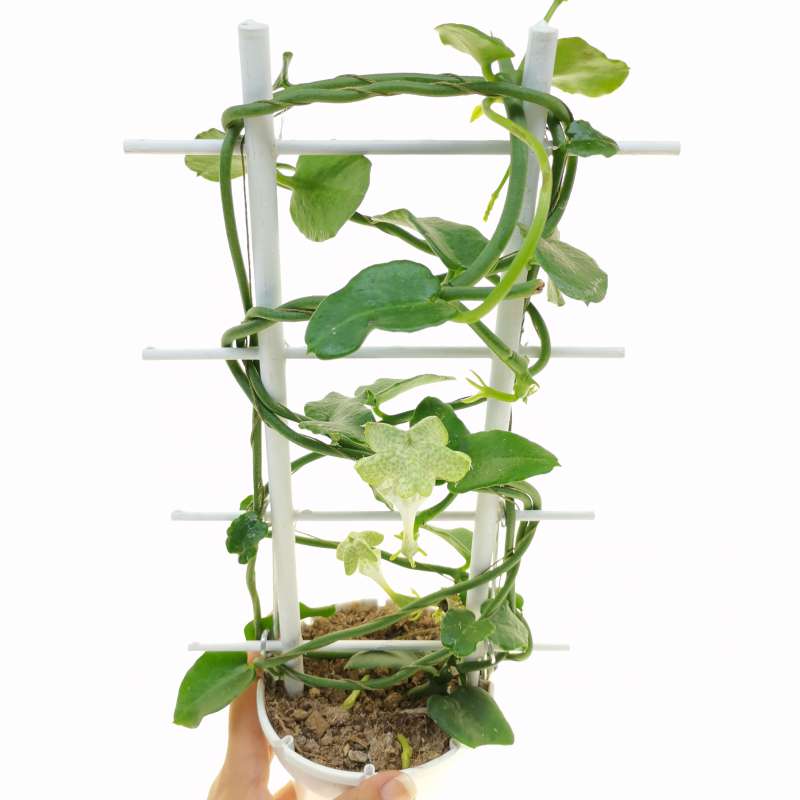
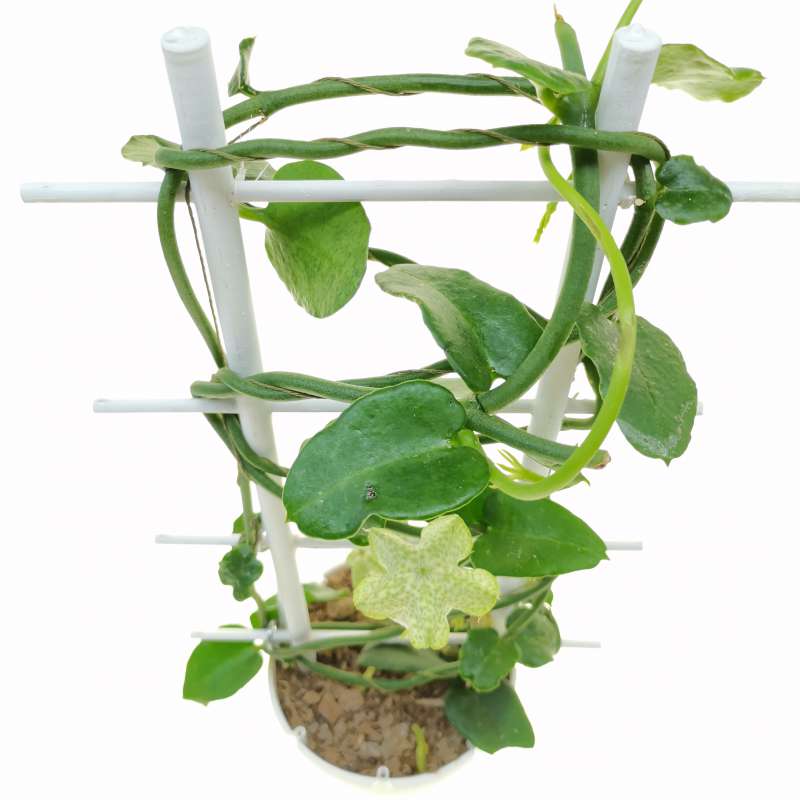
It is an extremely peculiar succulent, made up of very thin stems that can reach up to 4 meters in length and, for this reason, they tend to grow crawling on the ground, falling into wonderful cascades from hanging pots or, most of the time, as a climbing plant in which the stems are intertwined with each other in a whirlwind and scenic way. It has not very large leaves, arranged in pairs along the stem, of a bright and shiny green, consisting of a rounded shape which recalls a soft heart. The highlight of this plant, a feature that makes it to be appreciated all over the world, are its flowers. Truly unmistakable, when they bloom between spring and autumn they take on an umbrella shape, also similar to a parachute (hence the nickname "Parachute Plant") for its funnel tubes up to 7 cm long, which widen to join at the edges, resulting in a sort of cap at the apex that has a well-defined function: the petals close in this arrangement to retain the insects for the time necessary for them to be cover covered in pollen and disperse it as much as possible!
Shipping Info:
Shipping costs in Italy € 10.00 (islands € 13.00).Free shipping for orders over € 90.00.
We need 2-3 business days to prepare your plants. As soon as we have shipped your order, you will receive an email with the data to track the shipment. Delivery times with express courier are 24/48 hours, for the islands - an extra day is expected.
Find out more...
We need 2-3 business days to prepare your plants. As soon as we have shipped your order, you will receive an email with the data to track the shipment. Delivery times with express courier are 24/48 hours, for the islands - an extra day is expected.
Find out more...
Plant care:

It requires a lot of light throughout the year, however, avoid direct sunlight especially during the hottest hours of the day.

It is preferable to keep it at mild temperatures and never below 15 °C, for this reason it is recommended to shelter it during the winter period.

Water moderately and only when the soil is completely dry. It is enough to water it once a week in spring and summer, and reduce it to once every two months in autumn and winter.

The best soil is a well-draining and porous one, even better if further enriched with 50% of inert materials such as pumice, lapilli or clay.

They do not need frequent fertilization, it is sufficient to dilute the fertilizer with watering once a year.