Pelargonium lobatum


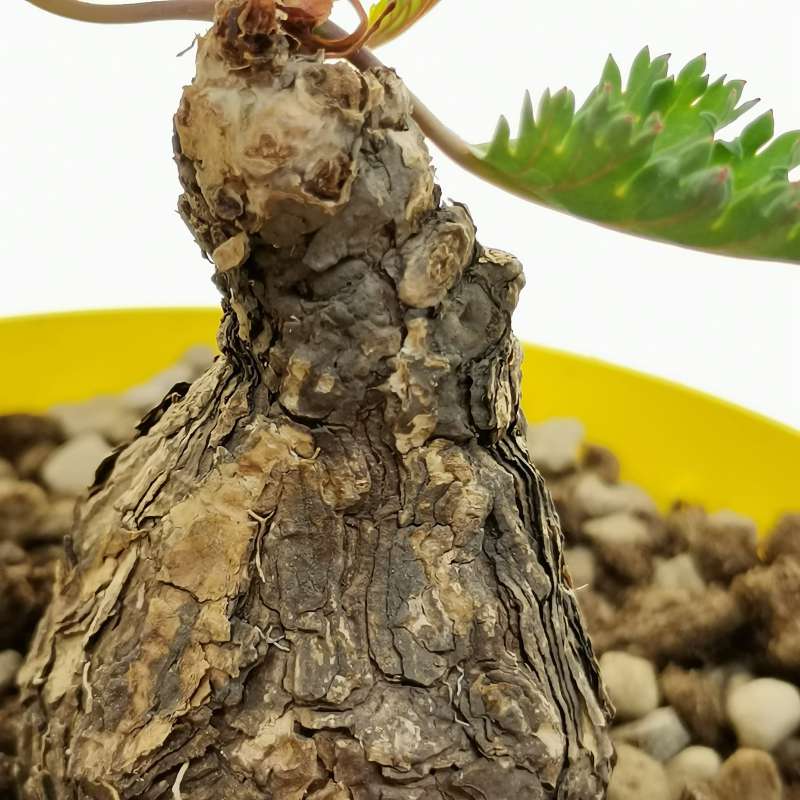


39.00€
Art. 48041
Available: 0
Size:
Pot: 14 cm.
Height caudex: 6 cm Width caudex: 3 cm The plant will be shipped bare root
Height caudex: 6 cm Width caudex: 3 cm The plant will be shipped bare root
Family:
Geraniaceae
Origin:
South Africa
Secure payments

Share it
Share it
Description:
The name of this species comes from the Latin and refers to the lobed shape of the leaves. It is a plant formed by an irregular woody caudex that, during the vegetative season, is hidden by the distinctive foliage: each leaf can reach a diameter of 30 cm! Their epidermis is completely covered by a short and thick hair that makes them almost silvery and pleasantly velvet-like to the touch. On the upper surface are well visible all the veins, whilst the margins are slightly indented, assuming overall a look similar to that of the leaves of the vine (from which, the common name of "Vine-leaved pelargonium"). P. lobatum changes considerably when it is enlivened by small purple flowers, with shaded edges of a delicate yellow, able to emanate, during the night hours, an incomparable scent!
Shipping Info:
Shipping costs in Italy € 10.00 (islands € 13.00).Free shipping for orders over € 90.00.
We need 2-3 business days to prepare your plants. As soon as we have shipped your order, you will receive an email with the data to track the shipment. Delivery times with express courier are 24/48 hours, for the islands - an extra day is expected.
Find out more...
We need 2-3 business days to prepare your plants. As soon as we have shipped your order, you will receive an email with the data to track the shipment. Delivery times with express courier are 24/48 hours, for the islands - an extra day is expected.
Find out more...
Plant care:

It requires a lot of light throughout the year, however, avoid direct sun rays, especially during the hottest hours of the day, as long as they might burn the leaves.

It is preferable to keep it at mild temperatures and never below 10 °C, for this reason it is recommended to shelter it during the winter period.

Water moderately, only when the soil is completely dry. It is enough to water the plant once a week in spring and summer, once a month in autumn and to suspend watering completely in winter.

A well-draining soil is an optimal solution, even better if further enriched with inert materials such as pumice or lapilli.

They do not need frequent fertilization, it is sufficient to dilute the fertilizer with watering once a year.