Aloe greatheadii





4.00€
Art. 52499
Available: 0
Size:
Pot: 6,5 cm.
Family:
Aloaceae
Origin:
Southern Africa
Secure payments

Share it
Share it
Description:
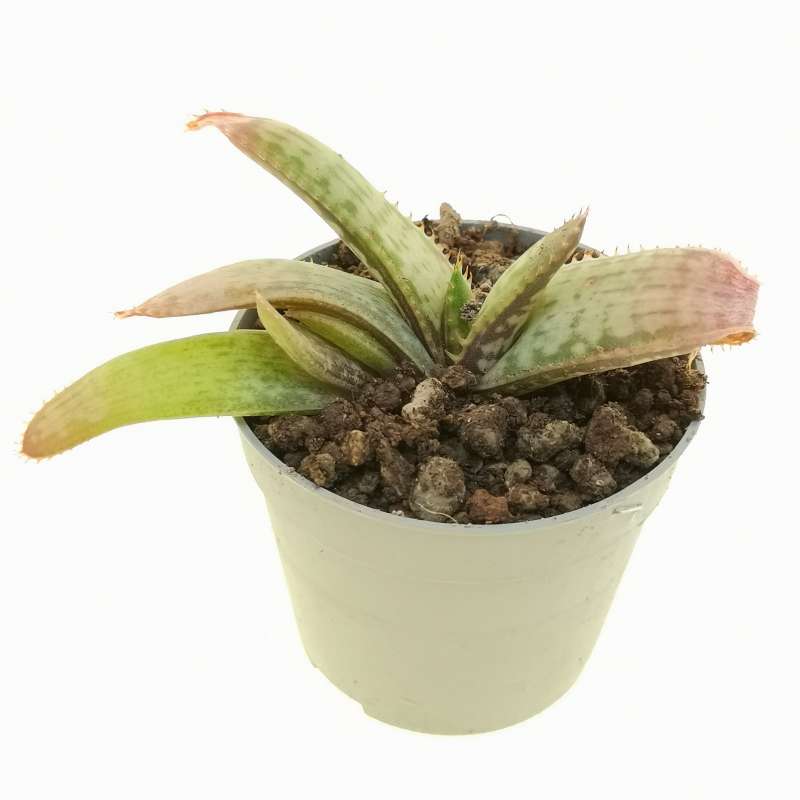
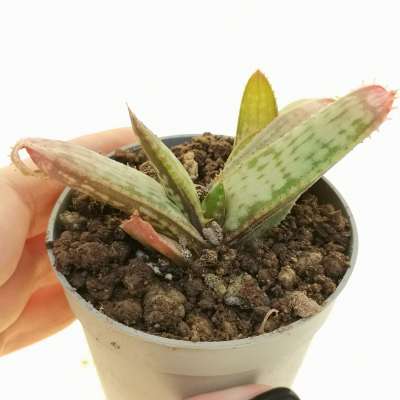
The name of the species was chosen in honor of Dr. Greathead, who collected and studied the first specimen. It is a beautiful stemless succulent plant, made up of a usually solitary rosette of fleshy leaves, very long and pointed, flat on the upper surface and adorned with reddish-brown teeth along the margins. The foliage takes on a characteristic intense green color, rather light, enriched by elongated white spots arranged in asymmetrical bands, which is why it is considered, together with other species, part of the subgroup “Aloe maculata”. In warm periods, all the long stems bloom beautiful inflorescences in shades of pink or reddish-orange. Perhaps not many know that the juice of the leaves of this Aloe, used by the African natives for food, is still used as an ointment to treat minor burns or wounds!
Shipping Info:
Shipping costs in Italy € 10.00 (islands € 13.00).Free shipping for orders over € 90.00.
We need 2-3 business days to prepare your plants. As soon as we have shipped your order, you will receive an email with the data to track the shipment. Delivery times with express courier are 24/48 hours, for the islands - an extra day is expected.
Find out more...
We need 2-3 business days to prepare your plants. As soon as we have shipped your order, you will receive an email with the data to track the shipment. Delivery times with express courier are 24/48 hours, for the islands - an extra day is expected.
Find out more...
Plant care:

It requires a lot of light all year round, however avoiding direct sunlight especially during the hottest hours of the day.

It is preferable to keep it at mild temperatures, but never below 8 °C, for this reason it is recommended to shelter it during the winter period.

Water moderately only when the soil is completely dry. It is enough to water the plant once every two weeks in spring and summer, once every two months in autumn and completely suspend watering in winter.

A well-draining and at the same time nourishing soil is an optimal solution. A mix of 60% of peat and 40% of inert materials is a perfect combination.

They do not need frequent fertilization, it is sufficient to dilute the fertilizer with watering once a year.